


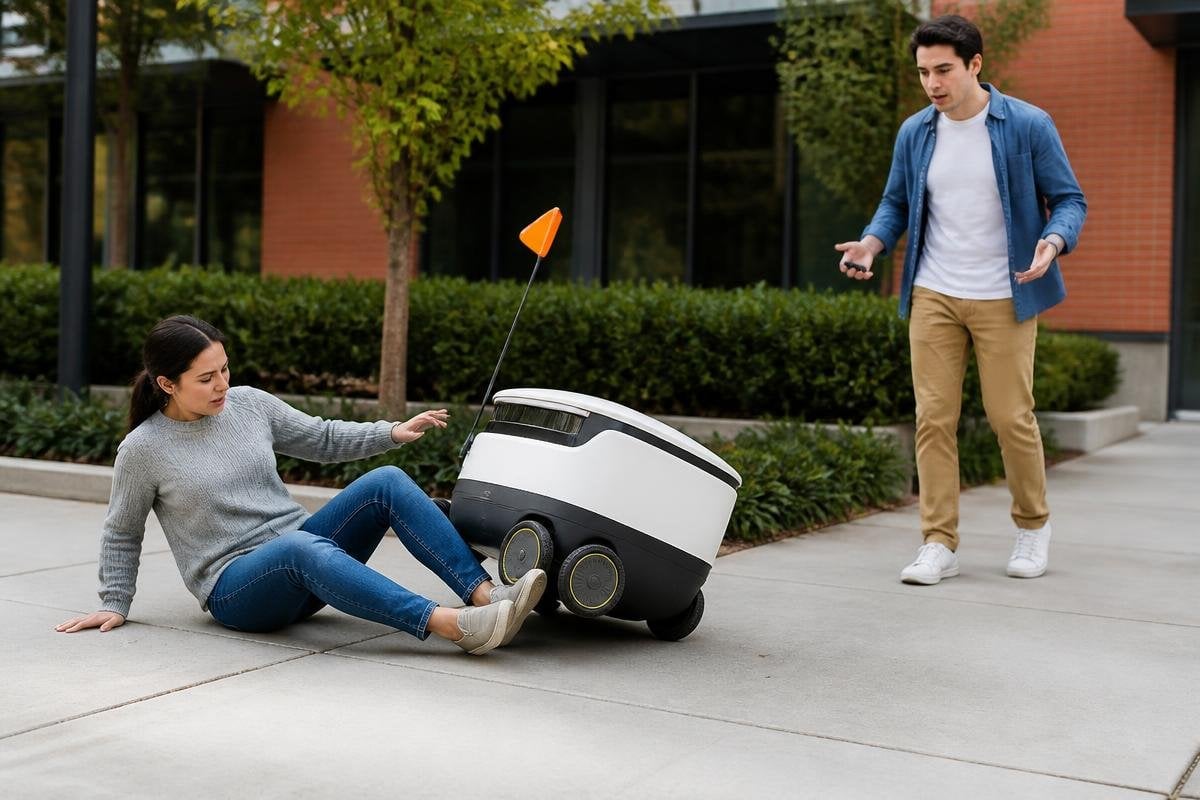
A delivery robot hits a person, a warehouse arm drops a load, or a home robot damages a door. The owner may be nearby, but that alone doesn’t show they caused the harm.
Liability should follow control, fault, and evidence. A buyer who follows the instructions deserves a different rule from an operator who removes a safety limit.
- The owner’s job: choose the machine, install it, and keep it within its stated limits
- The operator’s job: supervise tasks, respond to warnings, and stop unsafe work
- The maker’s job: build safe hardware, fix known defects, and explain limits
Ownership is only one part of the case
Buying a robot gives a person control over where it runs and what work it performs. It doesn’t give them control over every sensor reading, software decision, motor fault, or design choice.
A useful rule would ask what the owner could reasonably see and control. If a robot has a clear warning, the owner ignores it, and someone gets hurt, the owner may carry much of the blame. If the same robot fails during a task within its stated limits, the maker may need to answer for the fault.
That split matters for home buyers as well as companies. A person can check a charging area, keep children away from a moving arm, and follow setup instructions. They can’t inspect every circuit board or test every line of code.
The machine’s role changes the risk
A floor-cleaning robot in a private home creates a different risk from an autonomous mobile robot carrying heavy loads through a warehouse. The second machine moves near workers, crosses shared paths, and may affect an entire shift when it stops.
The owner’s duty should grow with the danger they create. A company running ten robots near people needs site rules, staff training, maintenance records, and a way to stop the fleet.
A person using one small robot at home still needs care, but the proof required should fit the machine and its surroundings. Robot owners also differ from operators: a company may own a machine while a contractor runs it.
Purchase and maintenance remain with the owner; the operator controls the daily task. A fair claim should examine both roles instead of placing every cost on the name on the receipt.
Evidence should decide the claim
Robot systems can record speed, location, warnings, obstacle readings, remote commands, and stop events. Those records can show whether a person changed a setting, ignored an alert, or used the robot outside its stated operating area.
The records also help owners. They may show that the machine received a valid command, lost a sensor signal, or continued moving after an emergency stop. A liability system that ignores those records rewards guesswork.
Privacy still matters. Owners should know what the robot records, how long it keeps the data, and who can request it after an incident. The person harmed needs access to useful evidence, while unrelated household or worker data should stay protected.
That record matters when an owner needs to trace a robot’s action after harm. Robotics reports from Robot24.com can place the machine, task, software, and test setting beside the company’s claims, helping show whether fault sits with the owner, maker, or operator.
Three parties can share the fault
A single incident can involve several failures. The maker may have shipped a machine with a bad sensor. The owner may have skipped a software update. The operator may have entered a restricted area after a warning.
That does not mean every case should split blame into equal pieces. The share should follow the part each party controlled and the evidence tied to that part. A maker that hides a known safety defect should face a different result from an owner who makes a careful choice and follows the manual.
I’d reject any rule that makes ownership alone enough to prove fault. It would make people pay for failures they had no practical way to prevent, while giving makers less reason to fix weak designs.
A practical owner check
Before putting a robot to work, an owner should:
- Read the limits: record the allowed speed, load, surface, weather, and operating area
- Set the stop path: place emergency stops where a person can reach them during the task
- Keep the records: save service work, warnings, software changes, and operator training
- Check the site: mark people-only areas, charging points, doors, stairs, and shared paths
- Review each incident: preserve logs and camera data before changing settings or restarting work
These steps won’t remove every risk. They create a record of what the owner knew, what they did, and what the robot did on its own.
The rule should be plain: ownership brings a duty to choose, set up, and supervise a robot with care. Fault should then follow the evidence, whether it points to the owner, operator, maker, or more than one of them.
